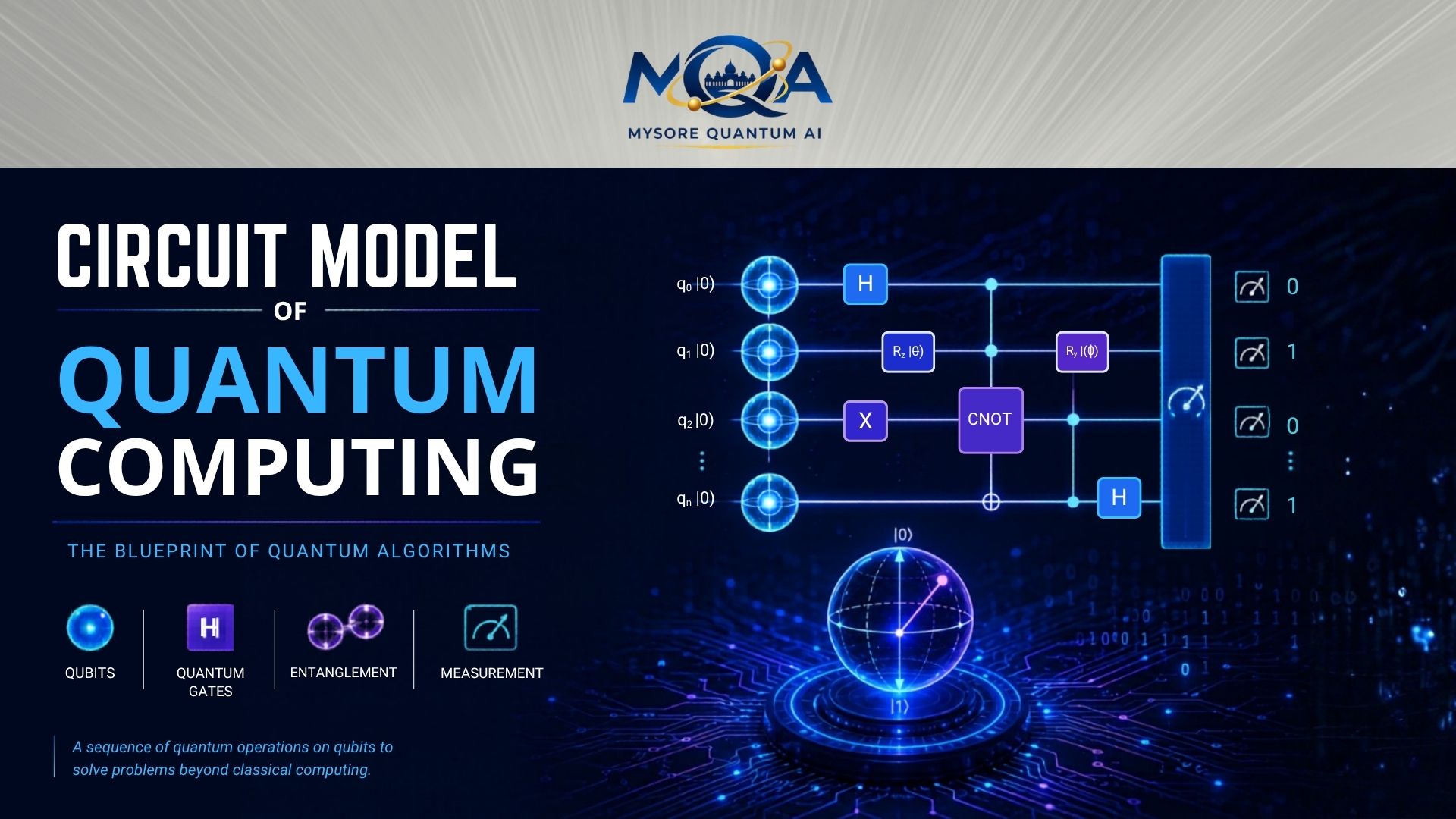
What is Circuit Model
In quantum computing, the Circuit Model is the most widely used framework for designing and representing quantum algorithms. It is conceptually similar to the classical logic circuits found in the digital devices, but it operates on the principles of quantum mechanics.
Think of it as a blueprint that describes a sequence of operations performed on a set of quantum bits (qubits) to solve a specific problem.
1. The Core Components
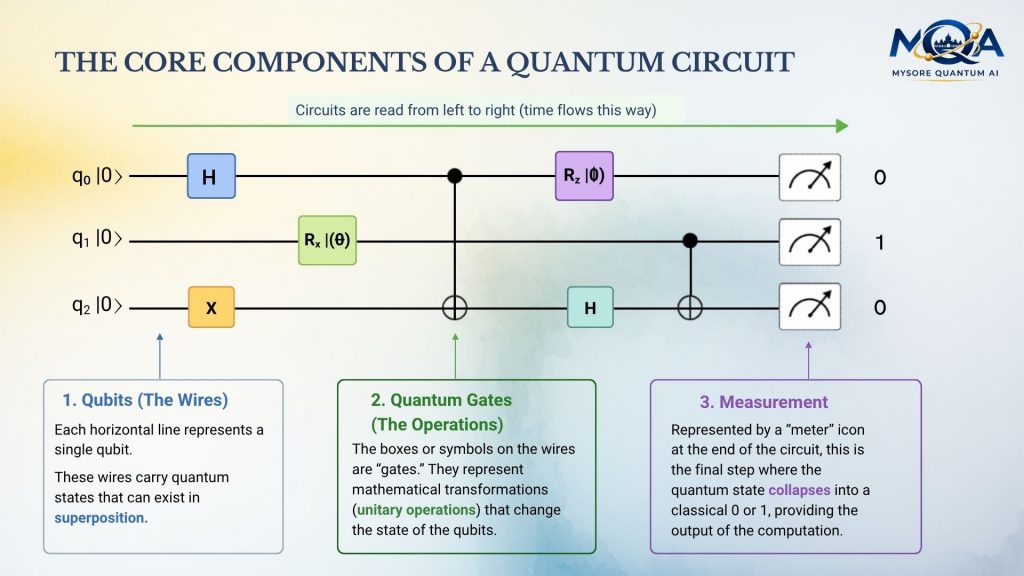
A quantum circuit is typically read from left to right, representing the passage of time. It consists of three primary elements:
- Qubits (The Wires): Each horizontal line in a circuit diagram represents a single qubit. Unlike classical bits (0 or 1), these wires carry quantum states that can exist in superposition.
- Quantum Gates (The Operations): The boxes or symbols placed on the wires are gates. They represent mathematical transformations (unitary operations) that change the state of the qubits.
- Measurement: Represented by a meter icon at the end of the circuit, this is the final step where the quantum state collapses into a classical 0 or 1, providing the output of the computation.
2. Common Quantum Gates
a. Pauli-X Gate
Acts like a classical NOT gate.


b. Hadamard Gate (H)
Creates superposition.
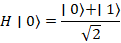
After applying the Hadamard gate, the qubit has equal probability of being measured as 0 or 1.
c. Controlled-NOT (CNOT) Gate
Used to create entanglement.
- One qubit acts as the control
- Another acts as the target
- The target flips only if the control qubit is |1⟩
The CNOT gate is fundamental in many quantum algorithms.
3. Key Differences from Classical Circuits
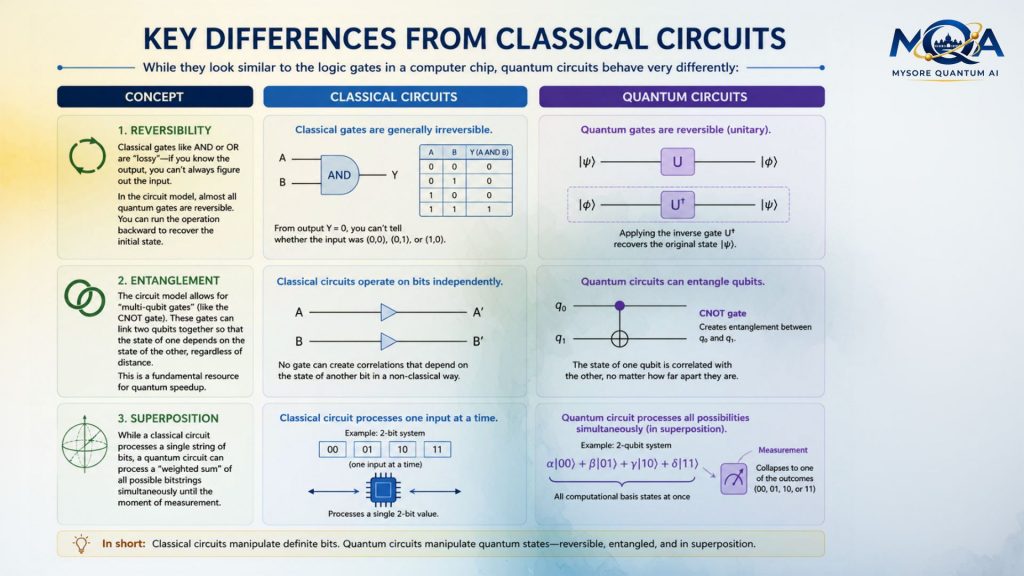
While they look similar to the logic gates in a computer chip, quantum circuits behave very differently:
Reversibility
Classical gates like AND or OR are lossy, if you know the output, you can’t always figure out the input. In the circuit model, almost all quantum gates are reversible. You can run the operation backward to recover the initial state.
Entanglement
The circuit model allows for multi-qubit gates (like the CNOT gate). These gates can link two qubits together so that the state of one depends on the state of the other, regardless of distance. This is a fundamental resource for quantum speedup.
Superposition
While a classical circuit processes a single string of bits, a quantum circuit can process a weighted sum of all possible bitstrings simultaneously until the moment of measurement.
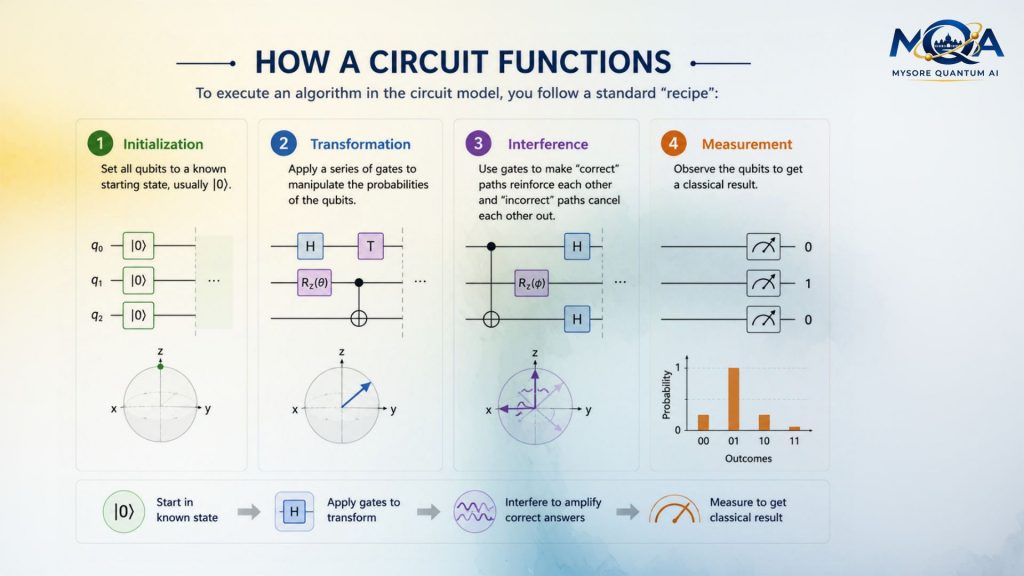
4. How a Circuit Functions
To execute an algorithm in the circuit model, you follow a standard recipe:
- Initialization: Set all qubits to a known starting state, usually |0⟩.
- Transformation: Apply a series of gates (Hadamard, Phase, T-gates, etc.) to manipulate the probabilities of the qubits.
- Interference: Use gates to make correct paths reinforce each other and incorrect paths cancel each other out.
- Measurement: Observe the qubits to get a classical result.
5. Why Use the Circuit Model?
It is the standard language of the field because:
- Universality: We have proven that a small set of basic quantum gates can be combined to perform any quantum computation.
- Hardware Mapping: Most physical quantum computers (like those using superconducting loops or trapped ions) are designed to execute these gate instructions directly.
6. Real-World Applications
Quantum circuits are used in:
- Cryptography
- Quantum simulation
- Optimization
- Drug discovery
- Machine learning
- Financial modeling
Famous algorithms built using the circuit model include:
- Shor’s Algorithm
- Grover’s Algorithm
- Quantum Fourier Transform (QFT)
While there are other models like Adiabatic Quantum Computing (which looks at energy landscapes) or Measurement-Based Quantum Computing, the circuit model remains the primary tool for researchers and developers to visualize and build the quantum future.